 BarevTrip
How many tourists came to Armenia in 2025, and where from
In 2025 Armenia received 2,263,642 tourists, according to Armstat, which follows the UNWTO methodology (the World Tourism Organization: a tourist is someone who spends at least a day in the country and no more than a year). That is 2.5% more than in 2024 (2,208,179) and 19.5% more than in 2019. By citizenship Russia leads with 921,704 people, 40.7%; next come citizens of Armenia who entered as tourists, 319,285 (14.1%), Georgia with 288,578 (12.7%) and Iran with 182,364 (8.1%). Income from non-residents’ trips in the Central Bank’s balance of payments is $2,910.7 million, 6.7% more than a year earlier.
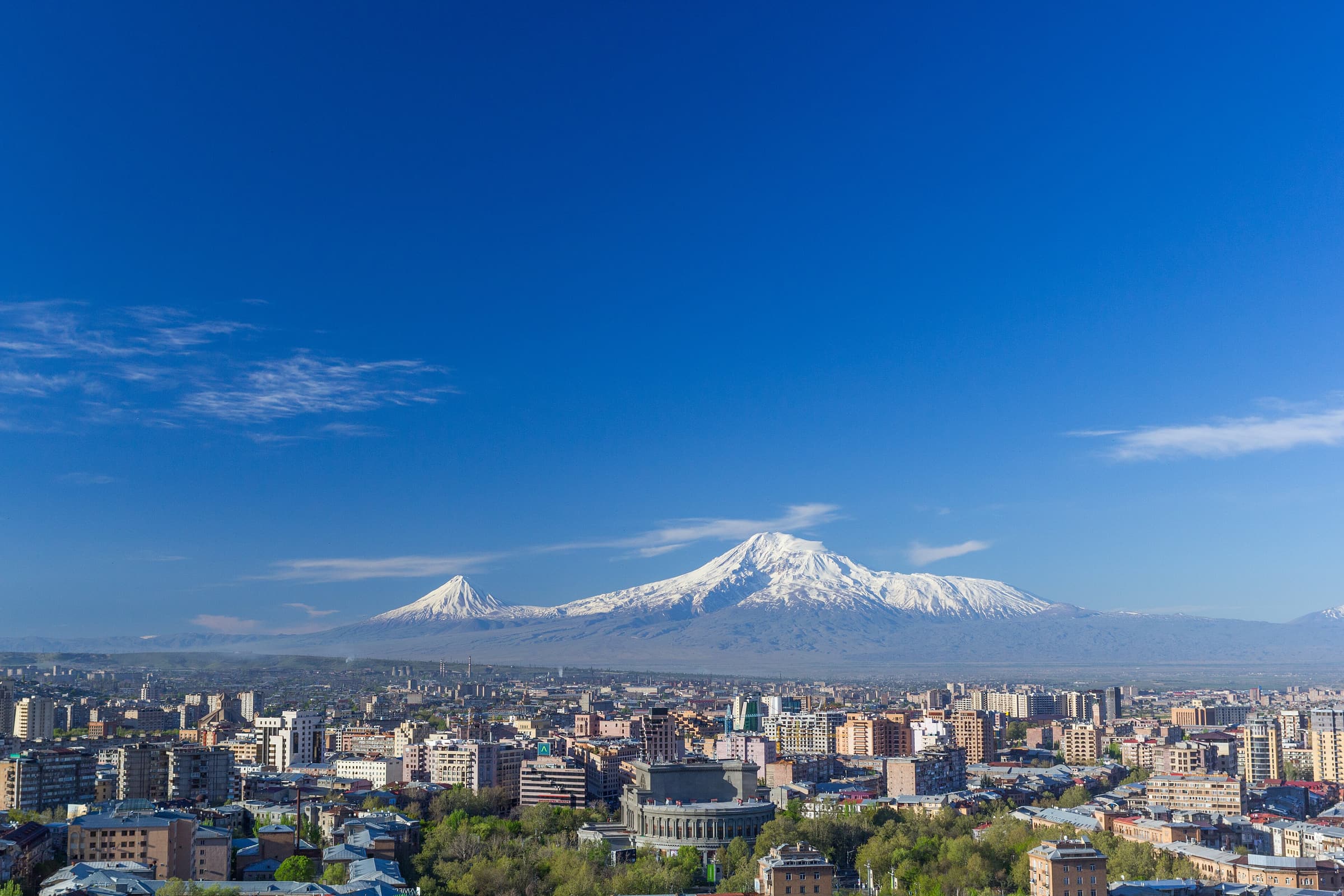 Photo: Սէրուժ Ուրիշեան (Serouj Ourishian), CC BY 4.0
Contents
- How many tourists came in 2025
- Where they came from: countries by citizenship
- How long they stay and who they are
- How much money the trips brought
- When they travel: the season by quarter
- What tourists do in the country: the 2023 survey
- What next: nine months of 2026 and the targets to 2030
- What this means for your trip
- What to check on the spot
How many tourists came in 2025
Armstat’s series by year: 2023 remains the peak, and 2025 is the second-best result since observations began in 2006.
Tourists (UNWTO methodology)
- 2019
- 1,894,377
- 2020
- 360,338
- 2021
- 875,772
- 2022
- 1,665,658
- 2023
- 2,316,210
- 2024
- 2,208,179
- 2025
- 2,263,642
Against 2024 that is growth of 2.5% (+55,463 people), against 2023 a fall of 2.3%, against 2019 a rise of 19.5% (+369,265).
By quarter in 2025: Q1 — 386,741 (17.1% of the year), Q2 — 520,394 (23.0%), Q3 — 827,112 (36.5%), Q4 — 529,395 (23.4%). More than a third of the annual flow falls in July–September.
Where they came from: countries by citizenship
Armstat splits tourists by citizenship, not by country of residence. That is why the table has an “Armenia” row: these are citizens of Armenia who entered the country as tourists. Calling the total “foreign tourists” would be wrong — without citizens of Armenia, 1,944,357 people remain (85.9%).
2025
- Russia
- 921,704
- Armenia
- 319,285
- Georgia
- 288,578
- Iran
- 182,364
- USA
- 60,891
- China
- 45,004
- France
- 35,847
- Germany
- 34,136
- India
- 28,450
- Ukraine
- 27,648
- Italy
- 22,669
- Philippines
- 16,650
Share
- Russia
- 40.7%
- Armenia
- 14.1%
- Georgia
- 12.7%
- Iran
- 8.1%
- USA
- 2.7%
- China
- 2.0%
- France
- 1.6%
- Germany
- 1.5%
- India
- 1.3%
- Ukraine
- 1.2%
- Italy
- 1.0%
- Philippines
- 0.7%
vs 2024
- Russia
- −1.7%
- Armenia
- +1.8%
- Georgia
- +8.5%
- Iran
- +3.3%
- USA
- +3.3%
- China
- +37.1%
- France
- +18.7%
- Germany
- +18.9%
- India
- −34.9%
- Ukraine
- −2.1%
- Italy
- +42.0%
- Philippines
- −32.7%
The first four rows add up to 1,711,931 people, 75.6% of all tourists. Russia’s share has been falling for the second year running: 49.1% in 2023, 42.5% in 2024, 40.7% in 2025, although in absolute numbers it lost only 1.7% over the year. Among the 18 countries that sent at least 10 thousand tourists in both years, Italy, China and Germany grew fastest, while India and the Philippines fell most.
How long they stay and who they are
In 2025 tourists spent 65,696,525 nights in Armenia; Armstat’s average length of stay is 29 days. Do not read that figure as an “average holiday”: it averages everyone, including citizens of Armenia who entered as tourists, and they stay 63 days on average.
By citizenship: Armenia — 63 days, Georgia — 31, Iran — 29, Russia and the USA — 25 each, Ukraine — 24, France — 22, Germany — 17, India — 13, Italy — 10, China — 7.
Age: half of tourists (50.6%) are between 36 and 63, another 19.3% between 26 and 35. Children under 15 make up 10.4%, people aged 64 and over 9.9%. Men are 55.6%, women 44.4% (Armstat, January–December 2025, p. 149).
How much money the trips brought
The Central Bank of Armenia counts income from non-residents’ trips as the Travel (credit) item of the balance of payments. In 2025 it is $2,910.7 million — 6.7% more than in 2024, but 6.6% less than in 2023, the peak of the series.
Travel (credit), $ million
- 2019
- 1,528.0
- 2020
- 287.3
- 2021
- 784.2
- 2022
- 2,418.9
- 2023
- 3,116.0
- 2024
- 2,727.0
- 2025
- 2,910.7
Compared with 2019 there are 19.5% more tourists and 90.5% more income, in current dollars, without adjusting for inflation. Of the $2,910.7 million, personal trips brought $2,465.2 million (84.7%) and business trips $445.5 million (15.3%). The third quarter accounted for $997.3 million, 34.3% of annual income. Residents of Armenia spent $2,320.4 million abroad over the same year; the balance of the item is +$590.2 million.
Travel covers services not only to Armstat’s tourists but also to those who stayed in the country for less than 24 hours, so you cannot divide income by the number of tourists.
When they travel: the season by quarter
The third quarter has been the peak three years running, and in 2025 its share is higher than in the previous two years.
Q1
- 2023
- 19.4%
- 2024
- 19.7%
- 2025
- 17.1%
Q2
- 2023
- 24.1%
- 2024
- 23.1%
- 2025
- 23.0%
Q3
- 2023
- 35.7%
- 2024
- 35.1%
- 2025
- 36.5%
Q4
- 2023
- 20.8%
- 2024
- 22.1%
- 2025
- 23.4%
By month in 2024 (the government’s Strategy), the peak was August with 300,919 tourists (13.6% of the year) and the low February with 127,241 (5.8%). The 2023 survey of arriving visitors shows the same picture for independent tourists: 38.3% of arrivals were in the third quarter.
What tourists do in the country: the 2023 survey
This section draws on the 2023 International Visitor Survey: 12,000 arriving visitors interviewed at four land border crossings and two airports throughout the year. Countries there are counted by place of residence, not by citizenship.
Purpose of the trip: leisure — 43.1%, relatives and friends — 30.1%, work — 7.8%, business — 5.9%. Length of stay: up to 5 nights — 55.7%, 6–10 nights — 20.4%. Leisure visitors were drawn to Armenia by nature and sights (36.1%), historical and cultural heritage (29.2%) and food (11.7%); they learned about Armenia mostly from friends and relatives (42.8%), social media (12.1%) and search (10.6%). More than 96% of respondents rated the sights “good” or “excellent” and 94.8% the food, while the quality of roads, at 64.4%, was lower than any other category. 43% came for the first time and 97% planned to return.
Where leisure visitors go outside Yerevan, and which catalogue route covers each region:
Visited, share of respondents (2023)
- Gegharkunik
- 35.8%
- Kotayk
- 31.8%
- Tavush
- 18.8%
- Ararat
- 15.3%
- Vayots Dzor
- 9.9%
- Syunik
- 8.0%
- Shirak
- 7.8%
- Armavir
- 7.5%
- Aragatsotn
- 4.0%
- Lori
- 4.0%
BarevTrip catalogue route
- Gegharkunik
- Lake Sevan & Tsaghkadzor, Garni, Geghard & Lake Sevan
- Kotayk
- Garni Temple & Geghard Monastery
- Tavush
- Lake Sevan, Dilijan & Parz Lake
- Ararat
- Khor Virap Monastery
- Vayots Dzor
- Khor Virap, Areni & Noravank
- Syunik
- Tatev Monastery & Wings of Tatev
- Shirak
- Gyumri & Marmashen Monastery
- Armavir
- Echmiadzin, Zvartnots & Khor Virap
- Aragatsotn
- Amberd Fortress & Byurakan Observatory
- Lori
- Haghpat & Sanahin Monasteries
In Yerevan respondents spent 9.4 nights on average, in the other regions usually less than one: the regions are mostly seen in a day trip from the capital. On Garni Temple in Kotayk, see Garni Temple: what it is, hours, tickets, how to get there from Yerevan.
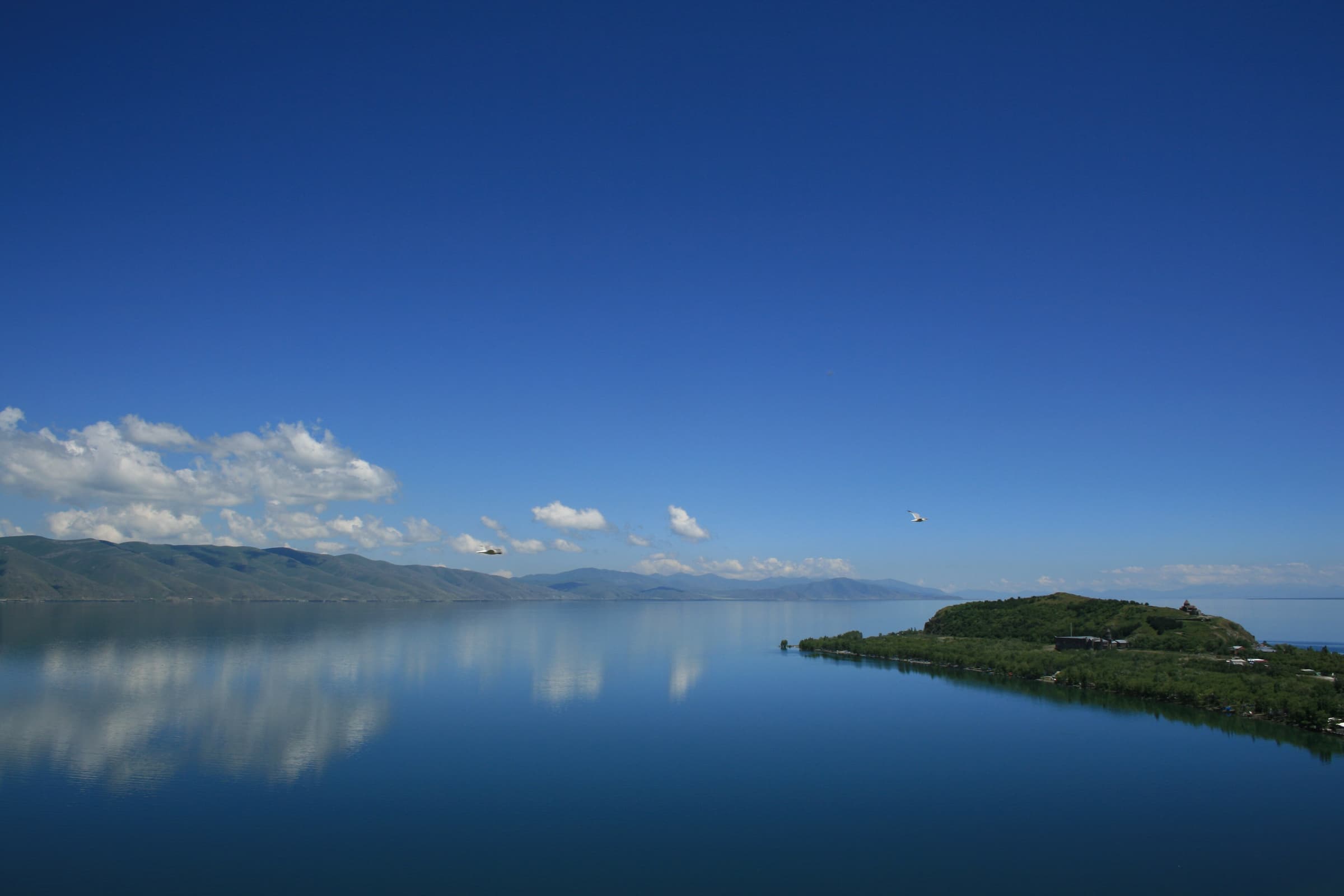 Photo: a-rubenyan, CC BY 3.0
What next: nine months of 2026 and the targets to 2030
For January–September 2026 Armstat counted 1,757,349 tourists, 1.3% more than in the same months of 2025. The data is preliminary.
Tourists
- Q1
- 453,138
- Q2
- 588,460
- Q3
- 715,751
- January–September
- 1,757,349
vs 2025
- Q1
- +17.2%
- Q2
- +13.1%
- Q3
- −13.5%
- January–September
- +1.3%
By citizenship over the nine months: Russia — 704,935 (−1.2%, share 40.1%), Georgia +14.6%, Germany +15.0%, China +12.6%; USA −25.2%, India −41.8%. Travel (credit) income for the first half of 2026 is $1,434.0 million, 19.6% more than a year earlier.
The Tourism Development Strategy for 2026–2030, approved by the government on 8 January 2026, sets targets for 2030: 3 million international tourist visits (2024: 2.2 million), average spending of at least $105 a day (2024: $83.7), a median stay of 12 nights (2024: 10) and annual tourist spending of $3.8 billion. The same Strategy forecast that the decline would continue in 2025 because of a smaller flow from Russia; in fact the year closed with growth of 2.5%, and the flow from Russia fell by 1.7%.
What this means for your trip
- July–September is 36.5% of the annual flow. On routes with four to five hours behind the wheel the catalogue advises an 08:00 pickup instead of the usual 09:00: Khor Virap, Areni & Noravank, Dilijan, Parz Lake, Haghartsin & Goshavank. Three routes are seasonal: Amberd Fortress & Byurakan Observatory runs June–October, Amberd, Aragats & Lake Kari and Grand South Loop: Khor Virap, Noravank, Tatev, Karahunj & Sevan May–October. For what is open in winter, see where to go from Yerevan in winter.
- According to the 2023 survey most visitors stay up to 5 nights, so there are usually one or two days for trips from Yerevan: how many days you need for day trips from Yerevan, what to combine in one day from Yerevan. The two regions leisure visitors go to most are covered in one day: Garni, Geghard & Lake Sevan is 9 hours, 200 km, 45,000 AMD per car for up to 4 people or 62,000 AMD for up to 7. A shorter option is Garni Temple & Geghard Monastery, 5 hours, 30,000 AMD for a sedan. Sevan with Dilijan: Lake Sevan and Dilijan in one day.
- Respondents rated the roads lower than anything else (64.4%). BarevTrip drivers have at least 5 years’ experience and have experience driving across Armenia, including on mountain roads and in winter: how we choose our drivers. On how a private driver differs from a group tour and a rental car, see private driver, group tour or rental car.
- Children under 15 are 10.4% of tourists. A child seat is free on request and is required for children under 7; the type of seat comes with the confirmation: where to go for a day from Yerevan with children.
- Entrance tickets are not included in the price of the trip; they are bought on site, separately, and it is safer to have cash in drams: how to pay: card, cash, which currency. Cancellation is free up to 24 hours before pickup, and one free reschedule is available up to the same deadline.
- Arriving by air: the Zvartnots Airport ↔ Yerevan transfer costs 10,000 AMD for a sedan and 14,000 AMD for a minivan, one price day and night: airport transfer, From Zvartnots to the city at night: meeting, price, child seat, at Zvartnots at night: taxi or transfer.

What to check on the spot
- Driver’s language: our drivers speak different languages; name the one you need in your request and the dispatcher will confirm it along with the trip.
- Children’s ages: the child seat depends on them; it is free and comes with the confirmation.
- Opening hours and tickets: they change by season. Take the entrance fee in cash in drams and check the place’s official site the day before.
- Winter and shoulder seasons: on seasonal routes the road may be closed by snow; the dispatcher will tell you what is open on your dates.
- Pickup time: 09:00 by default; on long routes the catalogue advises 08:00.
Questions about this trip
Where does Armstat get its tourist data?
How much does one tourist spend in Armenia?
How many tourists come on a package tour?
How many residents of Armenia travel abroad as tourists?
Ask AI about this trip
Opens in the service you choose, with a ready question about the article
Routes from this article

Sources and date of check
- Armstat, International Tourism: arrivals and departures of tourists by quarter and year (xls, file of 05.11.2026) and tourists by citizenship, overnight stays and length of stay 2020–2025 (xlsx, file of 08.09.2026) · checked November 6, 2026 · sections 1, 2, 3, 5, 7
- Armstat, Socio-economic situation of the RA, January–December 2025, section 4.2.1 “Tourism”, pp. 140–150 (in Armenian, PDF of 05.02.2026) · checked November 6, 2026 · sections 1, 2, 3
- Armstat, Socio-economic situation of the RA, January–September 2026, section 4.2.1 “Tourism”, pp. 143–152 (in Armenian, PDF of 05.11.2026) · checked November 6, 2026 · section 7
- Central Bank of Armenia, balance of payments under BPM6, item Travel, sheets Annual and Quarterly (xls, file of 30.09.2026; entry page old.cba.am/en/SitePages/statexternalsector.aspx) · checked November 6, 2026 · sections 4, 7
- International Visitor Survey 2023, Final Report (ATDF, World Bank LEID project; IZI and AMPERA), published 28.02.2025 · checked November 6, 2026 · sections 5, 6, 8
- Government of Armenia Decision No. 30-L of 08.01.2026, Annex 1 “Strategic Plan for the Development of Tourism for 2026–2030” (official translation by the Translation Centre of the Ministry of Justice of Armenia, index 30-L/08.01.2026/EN/H/05.03.2026; PDF of 06.03.2026) · checked November 6, 2026 · sections 5, 7
- BarevTrip — Day trips from Yerevan · checked November 6, 2026 · sections 6, 8
More articles

